


What Are Muscle Knots? Causes, Symptoms & Effective Treatments | Regain Physiotherapy Raebareli
- Dr Pradeep Verma
- Oct 31, 2025
- 2 min read

One of the most typical yet poorly understood causes of physical pain is muscle knots. Usually found in the neck, shoulders, and back, these small, tight spots of muscle fibers can develop anywhere on the body and cause stiffness, pain, and restricted mobility. Using cutting-edge, research-based physiotherapy procedures, we at Regain Physiotherapy and Sports Injury Clinic, Raebareli, specialize in locating and treating muscular knots.
🩺 What Are Muscle Knots?
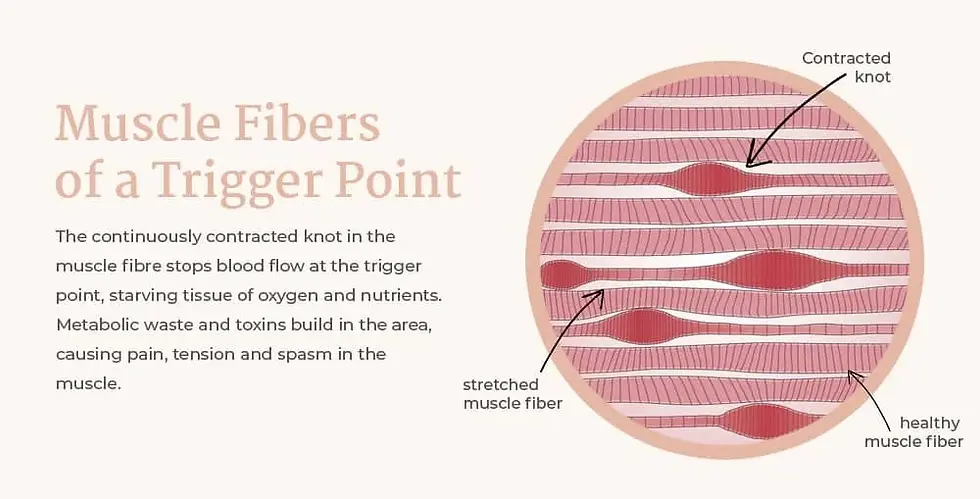
Myofascial trigger points, which are medically referred to as muscle knots, happen when muscle fibers stay tightened while at rest. As a result, a tiny, uncomfortable nodule forms beneath the skin. These knots may result in referred pain, which is discomfort that travels to other areas of the body, or localized pain.
For example, a knot in your shoulder might cause pain that radiates down your arm or up to your neck
⚠️ Common Causes of Muscle Knots

Muscle knots develop due to several everyday factors, including:
Poor posture (long hours at a desk or mobile use)
Muscle overuse during exercise or work
Stress and tension causing muscles to tighten
Lack of movement or stretching
Dehydration and poor nutrition
Injury or trauma to muscles
We carefully assess your posture, lifestyle, and muscle function at Regain Physiotherapy Clinic in order to identify the root reason not to only cure the symptoms.
💢 Symptoms of Muscle Knots
If you have muscle knots, you may experience:
Deep, dull pain in muscles
Tightness or stiffness around the affected area
Tender spots that worsen when pressed
Limited range of motion
Headaches or tingling (if the knot presses on nerves)
Ignoring these signs can lead to chronic muscle pain or postural issues over time.
💆 Effective Treatments for Muscle Knots at Regain Physiotherapy

In order to relieve muscle knots and restore normal movement, we at Regain Physiotherapy and Sports Injury Clinic, Raebareli, combine manual therapy with modern physiotherapy techniques.
Our Specialized Treatments Include:
Manual Therapy & Deep Tissue MassageGentle pressure is applied to loosen tight muscle fibers and improve blood flow.
Dry Needling TherapyHelps deactivate trigger points and reduce pain instantly.
Cupping TherapyIncreases circulation and promotes healing by relaxing tight tissues.
Myofascial ReleaseA targeted technique that stretches and relieves the fascia (connective tissue) around muscles.
Ultrasound & ElectrotherapyAdvanced modalities that accelerate healing and reduce inflammation.
Stretching & Strengthening ExercisesPersonalized exercise plans to prevent knots from coming back.
🌿 Preventing Muscle Knots
You can keep muscle knots away by:
Maintaining good posture at work
Staying hydrated
Taking regular stretch breaks
Doing warm-up and cool-down exercises
While muscle knots might not look like much, if they are neglected, they can result in severe discomfort, stiffness, and decreased movement. For long-term relief, it is essential to understand their causes and receive suitable physiotherapy treatment.

Comments